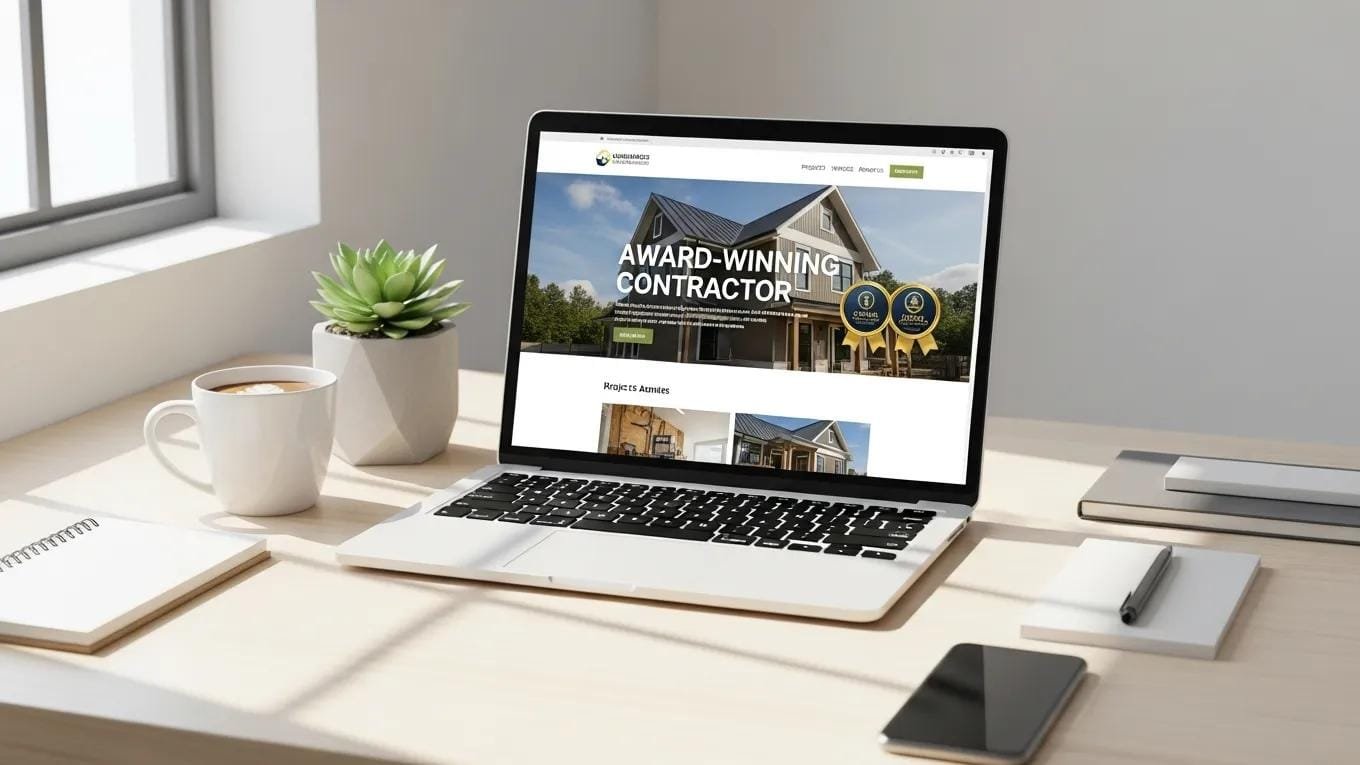
If you run a local contracting business—landscaping, paving, restoration, or demolition—an award‑worthy website is more than bragging rights. It’s a tool that attracts higher‑value jobs and turns homeowners into paying clients. This piece lays out practical, step‑by‑step guidance to build a site that looks professional and converts. Focus on user experience, technical performance, and local SEO to position your brand as the trusted choice in your market.
What “Award-Winning” Really Means
An award‑winning website combines thoughtful visual design, intuitive user experience, and strong technical performance. For contractors selling to homeowners, that translates to a site that looks credible, is simple to use, and loads quickly—so more visitors become inquiries and booked jobs.
The Criteria Behind Award‑Winning Websites
Judges typically evaluate sites on three practical dimensions:
- Design Aesthetics: A polished visual identity that reflects your trade—consistent colors, readable typography, and layouts that appeal to homeowners.
- User Experience: Clear navigation and content that help homeowners find services, read testimonials, and contact you without friction.
- Technical Performance: Fast load times and reliable responsiveness so homeowners can access your site from any device.
When these elements work together, your site builds trust and makes it easy for homeowners to choose your services.
Design Awards vs. Google’s Quality Signals — More Alike Than You Think
Design awards and Google’s quality signals reward the same fundamentals: excellent UX, mobile friendliness, and speed. Optimizing for those things increases your chances of recognition and improves search rankings—making your business easier to find for local homeowners.
Solid technical SEO and performance work also reinforce homeowner trust and help convert traffic into leads.
SEO’s Impact on User Trust and Conversions
This study looks at how Search Engine Optimization shapes consumer behavior and purchasing choices online. Technical SEO elements—like site speed and mobile responsiveness—make users feel comfortable and build perceived trust. The research highlights SEO’s role in guiding the customer journey from discovery to conversion.
Web performance tooling and the importance of web vitals, MK Dobbala, 2022
The 5 Core Principles of Award‑Winning Website Design
Contractors can reach award‑level design by applying five core principles that improve usability and conversion potential.
1. Visual Hierarchy That Guides the Eye
Use headings, images, and call‑to‑action buttons to steer homeowners to the most important information—services, reviews, and contact options. A clear visual path helps visitors understand your value quickly and know how to move forward.
2. Mobile‑First Experience That Never Compromises
Most homeowners search from phones. Designing for mobile first guarantees your site looks and works great on small screens, which boosts engagement and increases the chance they’ll reach out.
3. Speed and Core Web Vitals as Design Requirements
Fast load times keep homeowners on the page. Prioritizing Core Web Vitals—loading speed, interactivity, and visual stability—improves user satisfaction and search visibility, helping your site keep and convert visitors.
Consistent research shows slow sites lose potential customers fast.
Optimizing Web Performance for User Experience
In today’s online environment, users expect instant, smooth experiences. Optimizing web performance is essential for business success. A recent study[1] found that 52% of users abandon sites that take more than three seconds to load, underscoring the need for ongoing speed and responsiveness improvements.
Web performance tooling and the importance of web vitals, MK Dobbala, 2022
4. SEO‑Informed Site Architecture
Build your site with SEO in mind from the start. Logical structure, descriptive URLs, and content optimized for local search terms help homeowners find your services—whether they search for landscapers, pavers, restoration, or demolition.
5. A Conversion Path That Feels Natural, Not Pushy
Create inviting calls to action that guide homeowners toward contacting you or requesting a quote without pressure. A smooth conversion path raises the chance visitors become paying clients.
Demand Convert specializes in web design and conversion optimization for contractors. Their approach helps you apply these principles so your site drives performance and revenue.
Optimizing your website for conversions is one of the most reliable ways to grow your contracting business and win higher‑value jobs.
Website Optimization for Lead Generation & Revenue
For many businesses, the website is the primary source of new clients—especially after testing other channels. To increase sales and help PT. LVC grow, the site needs to be optimized to generate leads and convert visitors into customers, ultimately boosting revenue.
Enhancing PT. LVC Website Marketing Strategy To Generate Leads Through Conversion Rate Optimization (CRO), AR Qastharin, 2024
Common Website Design Mistakes That Kill Performance

Contractors often make design choices that hurt site effectiveness and lose homeowner interest. Avoid these common pitfalls to get the most from your website.
Choosing Aesthetics Over Load Time
A polished look matters, but oversized images and heavy animations can slow your site and push visitors away. Balance visual appeal with fast performance so homeowners actually see your services.
Ignoring the Mobile Majority
Skip mobile optimization and you’ll alienate a big share of homeowners. Make sure your site is fully responsive and delivers a smooth experience on phones and tablets.
Building Without an SEO Blueprint
Without an SEO plan, your site can be hard to find. Create an SEO blueprint to guide structure and content, improving local visibility and organic traffic.
No Clear Answer to “What Should I Do Next?”
Homeowners need clear next steps. If calls to action are missing or vague, visitors leave without converting. Make it obvious how to contact you or request a quote.
A Step‑by‑Step Path to Award‑Winning Website Design
Use this structured approach to build a website that attracts homeowners and turns them into clients.
Step 1 — Audit Your Current Site’s Performance Gaps
Review your site to find problems with speed, navigation, and conversion points. Use analytics to see how homeowners behave and identify the highest‑impact fixes.
Step 2 — Define Design Goals Tied to Business Outcomes
Set measurable objectives—more quote requests, better local rankings, or higher engagement—and align design decisions with those outcomes so every change moves the business forward.
Step 3 — Build With SEO and Conversion Architecture Embedded
Develop your site with SEO and conversion best practices baked in. Optimize content for local keywords, create clear navigation, and include strong, relevant calls to action.
Step 4 — Test, Validate, and Optimize After Launch
Once live, run A/B tests and track key metrics. Use data to refine layouts, messaging, and calls to action so homeowner engagement and conversions steadily improve.
Working with a professional web design service like Demand Convert can streamline this process and ensure your site balances aesthetics with measurable performance.
Budget vs. Full‑Service — What Investment Level Is Right for You?
Choose an approach based on your budget and growth goals when planning a redesign.
Budget‑Friendly Starting Points for SMBs
Small and mid‑sized contractors can start affordably with customizable templates that still deliver a professional look and the core features needed to convert customers.
Full‑Service Digital Marketing for Maximum Impact
If you want to own your local market, invest in full‑service digital marketing. That includes web design, ongoing SEO, content, and support to maximize lead generation and revenue.
How a Digital Marketing Partner Elevates Your Website Design Results
A digital marketing partner can significantly improve how well your website attracts and converts homeowners.
Why DIY Website Redesigns Often Plateau Early
Many contractors try a DIY redesign but hit limits without deep experience in design, SEO, and conversion optimization. That often leads to missed revenue opportunities and stalled growth.
What the Right Digital Marketing Partner Actually Does
A capable partner brings focused expertise in design, SEO, and conversion strategy for contractors. They help build a site that not only looks professional but also drives high‑value jobs and measurable revenue increases.
To drive targeted homeowner traffic, also consider exploring PPC services.
Frequently Asked Questions
What is award‑winning website design?
Award‑winning website design describes sites that stand out for their visuals, usability, and technical performance. For contractors, it means a site that attracts homeowner attention and converts visits into booked work.
Does website design affect SEO rankings?
Yes. A well‑designed, well‑structured site that follows SEO best practices is more likely to rank higher, making it easier for homeowners to find your business online.
How much does professional website design cost for small businesses?
Costs vary with project scope. Basic options can start fairly low, while full‑service packages—tailored for contractors and including SEO and conversion work—typically run higher and reflect the value of ongoing performance improvements.
Can a small business compete with award‑winning website design?
Absolutely. Small contractors can compete by prioritizing clean design, excellent user experience, and focused local SEO. Clear messaging and solid execution help level the field against larger competitors.
Subject Matter Context
Core Pillar Connection: This technical guide is part of our High Performance Contractor Web Architecture series. For comprehensive execution and guaranteed results in your local area, review our official protocol: High-Performance Mobile-dominant Contractor Conversion Engines .

 How to Improve Page Speed for Local Contractors — Practical Steps to Win More Jobs