
If you run a local contracting business—landscaping, foundation repair, deck building, or similar—knowing which SEO activities actually drive homeowner leads is critical. This article lays out the core SEO Key Performance Indicators (KPIs) that matter for your business, so you can measure what works, improve your online visibility, and close more high-value jobs in your service area.
SEO KPIs are measurable signals that show how well your website attracts and converts homeowners searching for services like landscaping, demolition, or mold removal. Tracking the right KPIs ensures your marketing effort turns into real leads and revenue—not just vanity numbers.
This guide explains why many contractors focus on the wrong metrics, breaks down each KPI’s importance, and gives practical advice for monitoring them. We’ll also show how to build an SEO KPI dashboard tailored to your contracting goals so your team stays focused on winning clients and growing revenue.
Why Most Local Contractors Focus on the Wrong SEO Metrics
Too many contractors get sidetracked by metrics that look impressive but don’t help them book more jobs or increase revenue from homeowners.
The Vanity Metric Problem
Vanity metrics—like raw visit counts or social follower totals—can be misleading. A landscaping company might see lots of traffic but only a handful of quote requests. Those numbers don’t translate to booked work and can pull attention away from the metrics that actually drive contracts.
What a KPI Actually Measures
A Key Performance Indicator (KPI) is a measurable value that shows how effectively your contracting business meets its objectives—attracting qualified homeowners or booking higher-value jobs. KPIs focus on outcomes that affect your bottom line, not just surface-level activity.
How These 11 KPIs Were Selected
We chose these KPIs because they consistently help local contractors—pavers, power washers, pest controllers, and others—turn organic search traffic into paying customers. Each KPI offers actionable insight you can use to grow your business and win more high-ticket work.
KPI #1: Organic Traffic
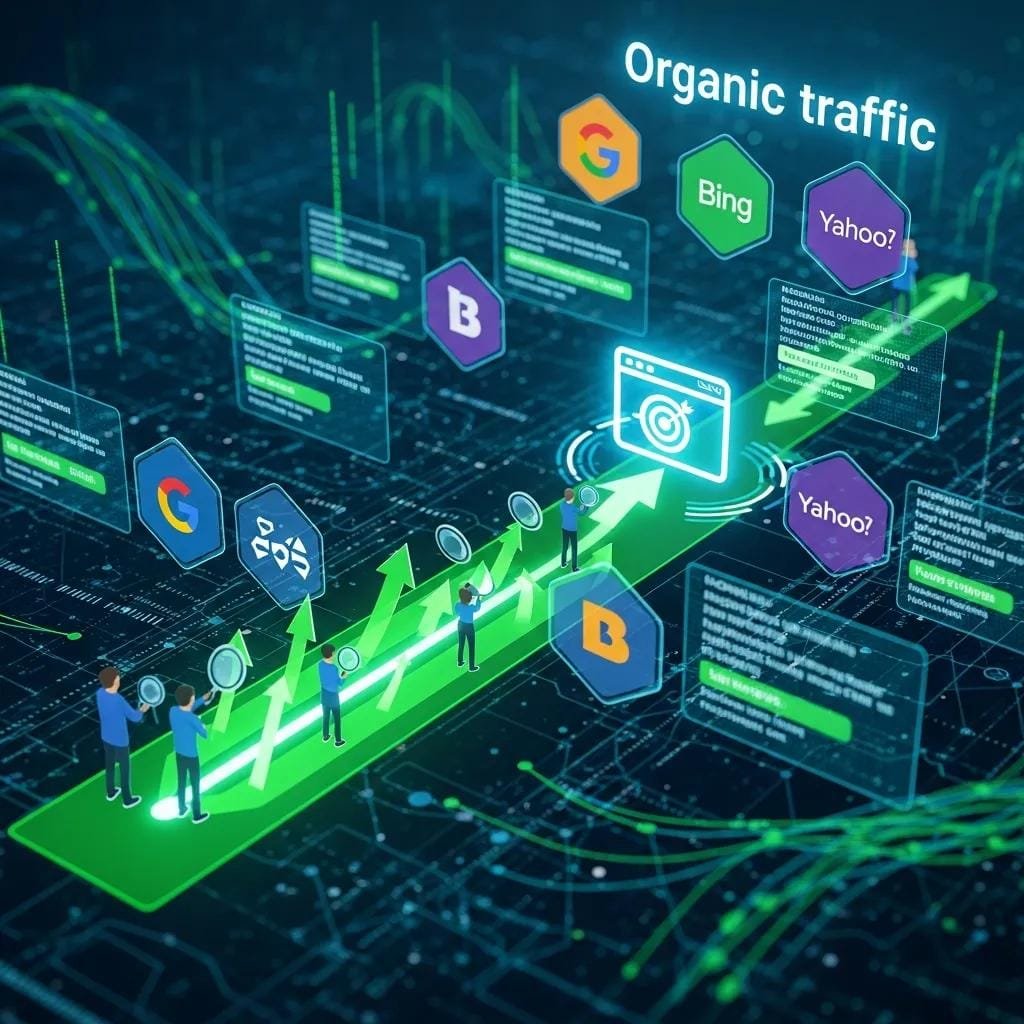
Organic traffic is the number of homeowners who reach your website from unpaid search results.
What It Measures
This KPI tells you how many potential clients find your services through search engines, showing your visibility for local keywords like “deck builders near me” or “foundation repair in [city].”
Why It Matters
More organic visitors means more homeowners discovering your offerings and a greater chance of booking high-value jobs. Tracking this shows whether your SEO work is actually getting people to your site.
How to Track It
Use tools like Google Analytics to monitor visitor volume, traffic sources, and behavior. Create goals to track how many organic visitors request quotes or contact you.
KPI #2: Keyword Rankings
Keyword rankings show where your site appears in search results for specific terms homeowners use to find contractors.
What It Measures
This KPI tracks your position for target keywords—examples include “mold removal services” or “excavation contractors.” Higher rankings increase the chance homeowners find you first.
Why It Matters
Knowing which keywords bring traffic helps you optimize the pages that attract homeowners ready to hire and spot opportunities to close ranking gaps on competitive terms.
How to Track It
Tools like SEMrush or Ahrefs give regular ranking reports. Monitor them and adjust content and on-page SEO to protect and improve your positions.
KPI #3: Click-Through Rate
Click-Through Rate (CTR) measures the percentage of homeowners who click your site after seeing it in search results.
What It Measures
CTR shows how effective your title tags and meta descriptions are at convincing homeowners to visit your site for services like pest control or power washing.
Why It Matters
A higher CTR drives more visitors and can signal to search engines that your result is relevant—often improving rankings and lead volume.
How to Track It
Google Search Console reports impressions and clicks so you can calculate CTR. Use that data to test better titles and descriptions that drive more clicks.
KPI #4: Organic Conversion Rate
The organic conversion rate measures the share of organic visitors who complete a desired action—requesting a quote, calling, or booking a service.
What It Measures
This KPI reveals how well your site turns searchers into customers, reflecting the quality of your content and user experience.
Why It Matters
Tracking conversions shows which SEO efforts lead to revenue so you can prioritize pages and tactics that produce real business results.
How to Track It
Set up goals in Google Analytics tied to actions that matter—contact form submissions, phone calls, or booking confirmations—to measure organic conversion performance.
KPI #5: Bounce Rate
Bounce rate is the percentage of visitors who leave your site after viewing only one page.
What It Measures
A high bounce rate suggests visitors aren’t finding relevant information or the user experience is poor.
Why It Matters
Lower bounce rates typically mean homeowners are engaging with your content and exploring services—an important step toward booking jobs.
How to Track It
Google Analytics provides bounce rate data. Use it alongside conversion metrics to pinpoint pages that need clearer messaging or stronger calls to action.
KPI #6: Pages Per Session
Pages per session measures how many pages a visitor views on average during a single visit.
What It Measures
This KPI gauges how engaging and useful your site is for homeowners researching services like demolition or tree removal.
Why It Matters
More pages per session usually means visitors are digging into your services and trust your expertise—both positive signs for conversion.
How to Track It
Monitor this metric in Google Analytics and tweak internal links, service pages, and CTAs to encourage deeper exploration.
KPI #7: Core Web Vitals
Core Web Vitals measure user experience elements—loading speed, interactivity, and visual stability—that affect how visitors perceive your site.
What It Measures
Key metrics include Largest Contentful Paint (LCP), First Input Delay (FID), and Cumulative Layout Shift (CLS), which together show how fast and stable your site feels to users.
Why It Matters
Good Core Web Vitals reduce frustration, lower bounce rates, and can improve search rankings—helping your contracting business convert more visitors into customers.
Improving these metrics has been shown to boost engagement and conversion rates.
Largest Contentful Paint
LCP measures how quickly the largest visible element loads; aim for under 2.5 seconds.
First Input Delay
FID measures responsiveness to user actions; a good target is under 100 milliseconds.
Cumulative Layout Shift
CLS measures visual stability while loading; a solid score is under 0.1.
How to Track It
Use Google PageSpeed Insights or Lighthouse to audit and improve your Core Web Vitals scores.
KPI #8: Backlink Profile Growth

Backlink profile growth tracks the number and quality of external sites linking to your website.
What It Measures
This KPI indicates your site’s authority and trustworthiness to search engines—factors that help you rank higher in local search results.
Why It Matters
Strong backlinks from reputable local sources—industry directories, local news, or community groups—can noticeably boost your visibility to homeowners.
How to Track It
Tools like Moz or Ahrefs reveal your backlink profile. Review links regularly to find opportunities for local, high-quality placements.
KPI #9: Domain Authority
Domain Authority estimates how likely your website is to rank in search results compared to competitors.
What It Measures
This score combines backlink quality, content relevance, and engagement to give a quick read on your site’s overall strength.
Why It Matters
A higher domain authority makes it easier to rank for competitive local terms and attract more homeowner searches.
How to Track It
Use tools like Moz to monitor your domain authority and track improvements over time.
KPI #10: Crawl Errors and Indexation Rate
Crawl errors and indexation rate measure how successfully search engines access and include your pages in their results.
What It Measures
This KPI flags issues search engine crawlers encounter—problems that can keep pages from appearing in search results.
Why It Matters
Fixing crawl errors ensures your content is discoverable by homeowners searching for your services and keeps your site healthy in search engines.
How to Track It
Google Search Console reports crawl errors and index status. Check it regularly and resolve issues to maintain SEO health.
KPI #11: Revenue from Organic Search
Revenue from organic search measures the income generated from homeowners who find your site through unpaid search results.
What It Measures
This KPI ties your SEO activities directly to financial outcomes, showing how organic traffic converts into booked jobs and revenue.
Why It Matters
Tracking this revenue lets you calculate SEO ROI and make informed decisions about where to invest your marketing budget.
How to Track It
Set up e-commerce or goal-based revenue tracking in Google Analytics to attribute income to organic search and evaluate SEO performance.
How to Build an SEO KPI Dashboard for Local Contractors
A dashboard helps you visualize performance across KPIs so you can quickly see what’s working and where to focus effort.
Choosing the Right Tools
Tools like Google Data Studio, SEMrush, and Ahrefs let you build customizable dashboards that track the KPIs most relevant to contractors—landscapers, mold remediators, and others.
Reporting Frequency and Stakeholder Visibility
Monthly reporting keeps your team and stakeholders aligned on progress and priorities. Share clear, actionable updates so everyone understands the impact on leads and revenue.
Connecting KPIs to Business Goals
Map each KPI to objectives like increasing homeowner leads or closing more high-ticket jobs. That alignment ensures your SEO work supports real business growth and brand authority.
Frequently Asked Questions
What are SEO KPIs?
SEO KPIs are measurable indicators that show how well your website attracts and converts homeowners looking for contracting services. They help you evaluate and improve your SEO strategy.
How often should I review SEO KPIs?
Review SEO KPIs at least monthly to track trends, catch problems early, and adjust tactics to maximize leads and revenue.
What is the most important SEO KPI for contractors?
Organic traffic is often the most important KPI because it directly reflects how many homeowners find your services and can result in more booked jobs.
How do I tie SEO KPIs to revenue?
Use tools like Google Analytics to track revenue and goal completions from organic traffic so you can measure how SEO efforts convert visitors into paying customers and calculate ROI.

 How You Can Build an Award‑Winning Local Contractor Website