
Landing page optimization is the process of improving the elements on a landing page — headline, copy, design, CTA, and speed — to increase the percentage of visitors who take a desired action. For SMBs running paid or organic traffic, it’s one of the highest-leverage ways to get more from your existing marketing budget without spending more on ads.
What Is Landing Page Optimization?
Landing page optimization means systematically improving the components of a page to convert more visitors into leads, customers, or subscribers. Unlike general website improvements, optimization focuses on one outcome: getting a visitor to take a specific action. It is about removing friction and aligning every element of the page with that single goal.
Before you start changing things, it helps to know what is actually broken. Not sure where your landing page is losing conversions? Get a free landing page review from our team.
Landing Pages vs. Regular Website Pages
A regular website page serves multiple purposes: it educates, navigates, and builds brand awareness. A landing page does one thing: it drives a single conversion action. That means no navigation menu pulling visitors away, no competing offers, and no ambiguous messaging. Knowing what pages your website should have helps you design each page for its specific role, so landing pages stay focused and website pages stay informative.
Why Conversion Rate Matters More Than Traffic Volume
More traffic to a broken page just burns more budget. If you are sending 1,000 visitors a month to a page converting at 1%, you are generating 10 leads. Improve that conversion rate to 5% with the same traffic and no extra ad spend and you are generating 50 leads. That is a 5x improvement in results without changing your paid vs. organic traffic strategy.
The Core Elements of a High-Converting Landing Page
Every high-converting landing page shares a set of foundational elements. When these elements work together, they create a seamless path from first impression to conversion.
To create an effective landing page, several core elements must be considered. Each component plays a crucial role in guiding visitors toward conversion.
Further research into conversion rate optimization models highlights a broader set of influencing factors that contribute to successful online customer behavior.
Conversion Rate Optimization Model & Key Influencing Elements
This paper will discuss conversion rate optimization in online retail environments. The paper reviews previous literature on the topic and then examines how one company has created its own model and used the model to successfully to enhance Internet businesses’ conversion rate optimization. This paper identifies the variables that influence online customer behavior and discusses the importance each of the seven elements; catalyst, persuasion, usability, interactivity, trust, aesthetics, and marketing mix.
Developing a new model for conversion rate optimization: A case study, 2013
Headline and Value Proposition
Your headline is the first thing visitors read, and it needs to do two things immediately: tell them what the page is about and give them a reason to keep reading. A strong headline is specific, benefit-driven, and speaks directly to the visitor’s problem or goal. Your value proposition, meaning why you and why now, should follow within the first two sentences. Vague headlines like Welcome to Our Website lose visitors before the page even loads.
Above-the-Fold Layout and Visual Hierarchy
What visitors see before scrolling is your most valuable real estate. A clean layout with a clear headline, supporting copy, and a prominent CTA guides the eye naturally toward your conversion goal. Visual hierarchy, using size, contrast, and spacing, tells visitors what to read first. If your CTA is buried or competing with distracting design elements, visitors will leave without acting.
Call-to-Action Placement and Copy
Your CTA button copy should be specific and benefit-driven. Get My Free Quote outperforms Submit every time because it tells the visitor exactly what they are getting. Place your primary CTA above the fold, and repeat it at least once further down the page. Use high-contrast colors that stand out from the rest of the page design because a CTA that blends in gets ignored.
Social Proof, Trust Signals, and Credibility Cues
Visitors arrive skeptical. Social proof reduces that skepticism. Client logos, star ratings, brief testimonials, and case study results all signal that other people have trusted you and gotten results. Guarantees such as money-back or satisfaction-based remove the risk of taking action. The more specific the proof, the more effective it is.
Page Speed and Mobile Responsiveness
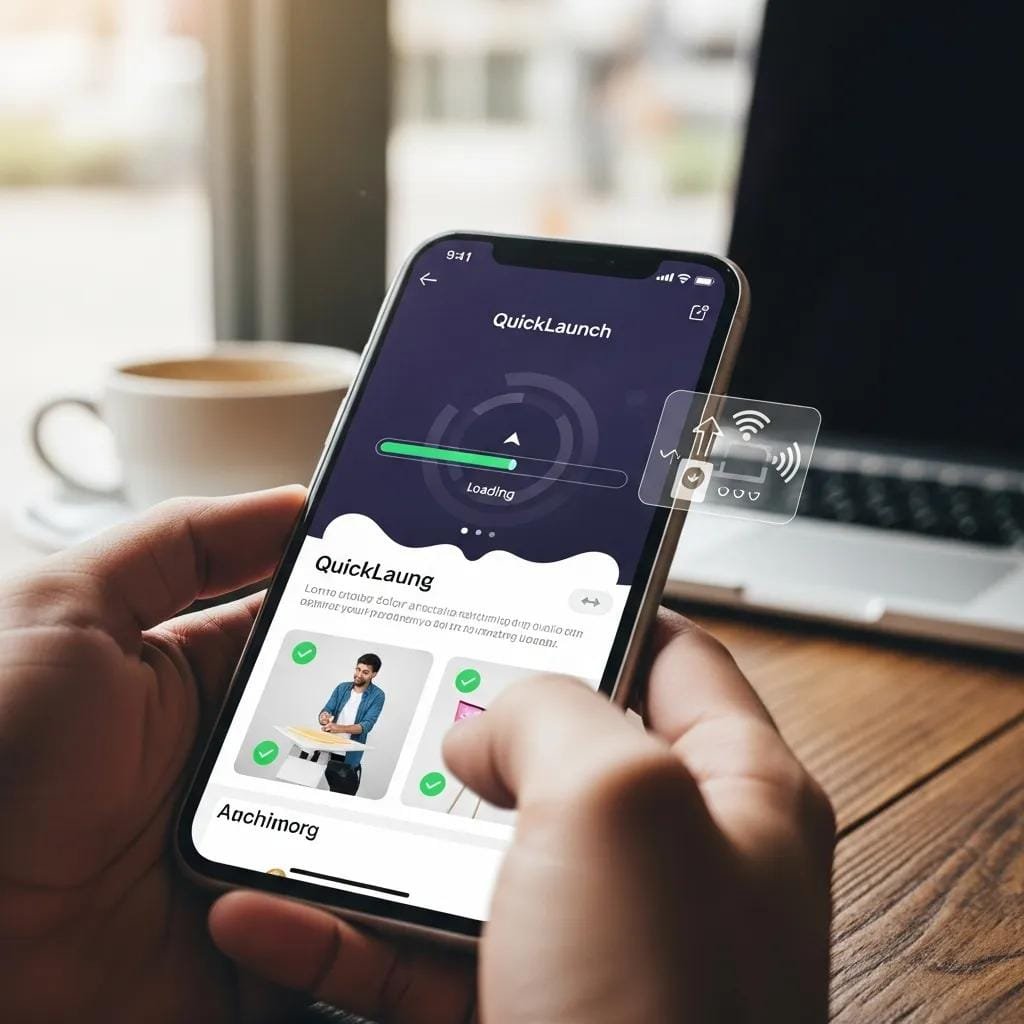
Every additional second of load time reduces conversions. A page that takes more than three seconds to load loses a significant portion of its audience before they ever read a word. More than 60% of paid traffic now arrives on mobile devices, so a page that looks broken on a phone is leaking conversions constantly. Compress images, minimize scripts, and test on actual mobile devices before you drive traffic.
Common Landing Page Mistakes SMBs Make
Most landing pages underperform not because of complex technical issues, but because of a few recurring mistakes. Use this section to identify what might be holding your current page back.
Trying to Accomplish Too Many Goals on One Page
One page should serve one goal. When you add navigation links, multiple offers, or competing CTAs, you dilute the visitor’s intent and reduce the likelihood of any single action being taken. The paradox of choice applies here because the more options you give visitors, the less likely they are to choose anything. Strip your landing page down to a single clear objective and build every element around it.
Using Weak or Generic CTAs
Submit, Click Here, and Learn More are passive, vague, and unconvincing. Effective CTAs are specific about what happens next and what the visitor gets. Get My Free PPC Audit, Start My Free Trial, or See Pricing all set clear expectations. Write your CTA copy from the visitor’s perspective: what are they actually getting when they click?
Message Mismatch Between Ad Copy and Landing Page
If your ad promises a Free 30-Minute Strategy Call and your landing page talks about your company history, visitors will bounce. Message match, meaning the consistency of language and offer between your ad and your landing page, is one of the highest-leverage conversion fixes available. When visitors arrive and see exactly what they clicked for, trust goes up and drop-off goes down.
Ignoring Mobile Users
More than 60% of paid traffic arrives on mobile. If your landing page was not designed with mobile users in mind, with small tap targets, text that requires zooming, and forms that are hard to fill on a phone, you are losing the majority of your audience before they ever consider converting. Mobile-first design is the baseline, not a bonus.
How to Optimize Your Landing Page Step by Step
Landing page optimization is most effective when treated as a repeatable process rather than a one-time fix. Follow these steps to build a page that improves continuously over time.
Step 1 — Define a Single Conversion Goal
Before touching your page, get clear on the one action you want visitors to take. Is it filling out a contact form, booking a call, or downloading a guide? Everything on the page, including headline, copy, CTA, and layout, should point toward that single goal. Multiple goals create competing priorities, and competing priorities kill conversion rates.
Step 2 — Audit Your Current Page Performance
Before you start changing things, know your baseline. Check your current conversion rate, bounce rate, and average time on page in Google Analytics. If you have heatmap data from tools like Hotjar or Microsoft Clarity, review where visitors are clicking, where they are stopping, and where they are dropping off. Data tells you where to focus.
Step 3 — Rewrite the Headline and CTA First
These two elements carry the highest conversion leverage on any landing page. A stronger headline can lift conversion rate significantly on its own. Start here before redesigning visuals or restructuring the layout. If your headline does not immediately communicate value and your CTA does not tell visitors what they are getting, no amount of design polish will fix the underlying problem.
Step 4 — Improve Load Speed and Mobile Experience
Run your page through Google PageSpeed Insights and address the most impactful recommendations first, typically image compression, unused script removal, and render-blocking resources. Then test the page on actual mobile devices, not just browser resizing. Fix layout issues, increase tap target sizes, and ensure forms are easy to complete on a small screen.
Step 5 — Run A/B Tests and Iterate
Do not guess what will improve performance, test it. Start with the highest-leverage variables: headline, CTA copy, hero image, and form length. Run one test at a time so you can isolate what is actually driving changes. Statistical significance typically requires 2 to 4 weeks of traffic depending on your volume.
Optimization takes time but with the right partner, you can compress the learning curve significantly. If you would rather skip the guesswork, our Enterprise PPC Management includes full landing page optimization as part of every campaign.
How to Measure Landing Page Performance
You cannot optimize what you do not measure. Tracking the right metrics tells you where your page is performing well and where it is losing conversions.
The Metrics That Actually Matter
Focus on the four metrics below. Together, they give you a complete picture of landing page performance.
Conversion Rate
The percentage of visitors who complete your goal action. Industry average falls between 2% and 5% for most industries, and top-performing pages regularly exceed 10%. If your conversion rate is below 2%, optimization should be your top priority before scaling any paid traffic.
Bounce Rate
Bounce rate measures the percentage of visitors who leave without taking any action. A high bounce rate, typically above 70% to 80% depending on your industry, signals that the page is not meeting visitor expectations. The most common causes are a weak headline, slow load time, or a mismatch between ad copy and page content.
Time on Page and Scroll Depth
These two metrics tell you whether visitors are actually engaging with your content. Low time on page under 30 seconds and low scroll depth suggest your headline or above-the-fold section is not compelling enough to hold attention. If visitors are scrolling but not converting, the issue is lower on the page, likely the CTA or value proposition.
Cost Per Conversion (for paid traffic)
For PPC campaigns, cost per conversion is the most direct measure of landing page ROI. If your cost per click is $5 and your page converts at 2%, your cost per conversion is $250. Improve that conversion rate to 5% with the same ad spend and your cost per conversion drops to $100. Landing page optimization is one of the most efficient ways to improve PPC performance without increasing budget.
How to Read Your Results and Decide What to Change
When to Bring in a Professional
DIY optimization can take you a long way. But there is a ceiling to what you can achieve without a dedicated testing framework, conversion copywriting expertise, and ongoing data analysis. At some point, bringing in a professional is the faster path to results.
Signs Your Landing Page Needs Expert Help
Consider bringing in outside expertise if you are experiencing any of the following: your conversion rate has been stuck below 2% despite multiple rounds of changes, you are running significant ad spend with no measurable improvement in conversion performance, you do not have A/B testing infrastructure in place, your page has not been meaningfully updated in over a year, or you are unsure which metrics to track or how to interpret what you are seeing. Any one of these signals is worth addressing. Multiple signals together mean optimization is costing you real money every day it goes unresolved.
What a Results-Driven Agency Does Differently
A performance-focused agency does not just redesign your page and move on. They bring a structured testing framework, SEO copywriting built around search intent, data analysis, and a continuous optimization cycle. Enterprise PPC Management at Demand and Convert includes landing page optimization as part of every campaign because we know a great ad sending traffic to a weak page is a wasted investment. The difference is not a one-time fix, it is an ongoing commitment to improving performance over time.
What is a Good Landing Page Conversion Rate?
A good landing page conversion rate typically falls between 2% and 5% for most industries, though top-performing pages can reach 10% or higher. For SMBs running paid traffic, a conversion rate below 2% is a clear signal that optimization is needed.
How Long Does It Take to See Results from Landing Page Optimization?
Basic improvements like a stronger headline or faster load time can show measurable lift within days. A/B testing for statistically significant results typically takes 2 to 4 weeks depending on traffic volume.
Should I Optimize My Landing Page Before or After Launching Ads?
Always before. Sending paid traffic to an unoptimized page wastes budget. Start with a solid baseline including a clear headline, one CTA, and fast load time before scaling spend.
Landing page optimization is not a one-time fix. It is an ongoing process and the sooner you start, the faster your ROI compounds. Ready to turn your landing pages into a conversion engine? Let us talk.
Subject Matter Context
Core Pillar Connection: This technical guide is part of our High Performance Contractor Web Architecture series. For comprehensive execution and guaranteed results in your local area, review our official protocol: High-Performance Mobile-dominant Contractor Conversion Engines .

 Why Local Contractors Should Invest in a Custom Website That Converts