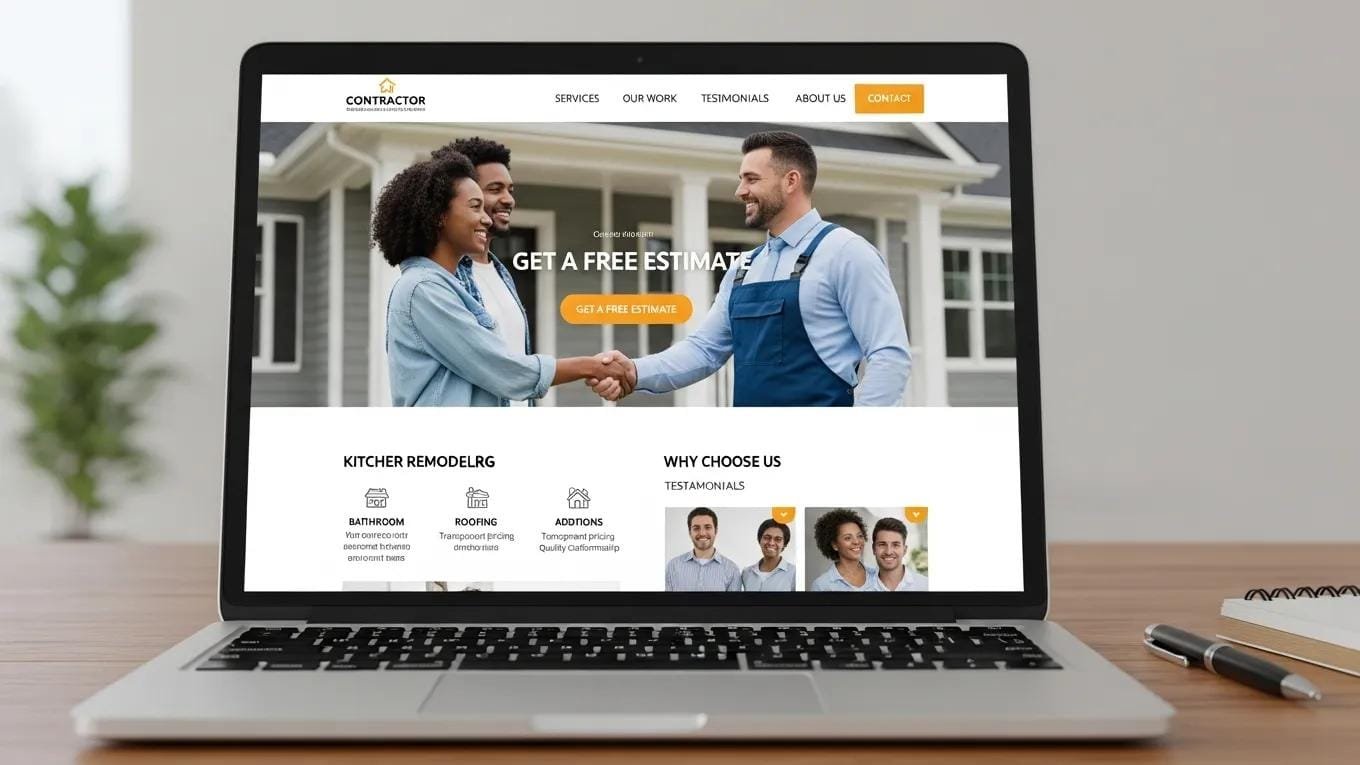
For blue‑collar contractors—landscapers, pavers, restoration teams—a high bounce rate means missed chances to connect with homeowners looking for big, paid projects. Bounce rate is the share of visitors who leave after viewing just one page; it usually signals your site isn’t answering questions or building trust. This guide lays out 16 actionable web design changes tailored to contractors so you can keep homeowners on your site, generate more leads, and close more high‑value jobs.
We’ll define the essentials and walk through practical examples for your trade so you can build a site that holds attention and converts visitors into paying clients.
What Is Bounce Rate — and Why It Costs Blue‑Collar Contractors Money
Bounce rate is the percentage of visitors who leave after viewing a single page. For contractors, a high bounce rate often means homeowners aren’t finding the info or trust signals they need to request a quote or book a job. That translates to lost estimates, missed contracts, and lower revenue. Improving bounce rate keeps potential clients exploring your services and increases the chance they’ll hire you for landscaping, paving, or restoration work.
Research shows that better site performance and clearer design improve both bounce rates and conversion outcomes.
Web Performance Optimization for Bounce Rate & Conversion
This paper demonstrates how Web Performance Optimization (WPO) can boost conversion and reduce bounce rates. It examines applying WPO techniques to opinion forms on a major Polish portal, evaluating and optimizing company and product feedback forms using modern WPO methods.
Conversion rate gain with web performance optimization.
A case study, L Borzemski, 2018
16 Web Design Tips to Reduce Your Bounce Rate and Win More High‑Ticket Trade Jobs
Applying smart web design practices can cut bounce rates for contractors by keeping homeowners engaged and guiding them toward a quote or booking. Below are 16 targeted tips for landscapers, pavers, and restoration companies to improve their websites and turn visitors into customers:
Studies consistently point to certain design elements as key to keeping users engaged—elements every contractor website should prioritize.
Key Web Design Elements for User Engagement
Effective design plays a major role in engaging users on websites and mobile apps. A review of the literature highlights recurring elements: navigation, visual representation, content organization, usefulness of content, clear purpose, simplicity, and readability.
A literature review: website design and user engagement, J Chiu, 2016
1. Optimize Your Page Load Speed
Homeowners expect fast pages. Even a few seconds of delay can send them to a competitor. Compress images, cut unnecessary HTTP requests, and enable browser caching. Use Google PageSpeed Insights to find and fix slow elements. Faster pages make users happier and improve SEO, so homeowners can find and trust your services more easily.
Recent studies confirm the clear link between load time, bounce rate, and search performance.
SEO & Load Time: Minimizing Website Bounce Rate
Search Engine Optimization (SEO) is essential for online visibility. This study technically justifies the importance of search engines and SEO by quantifying how bounce rate and load time affect user retention on a website.
Seo: Tips To Minimize Bounce Rate Of Website User, MN Khalid, 2024
2. Design for Mobile‑First
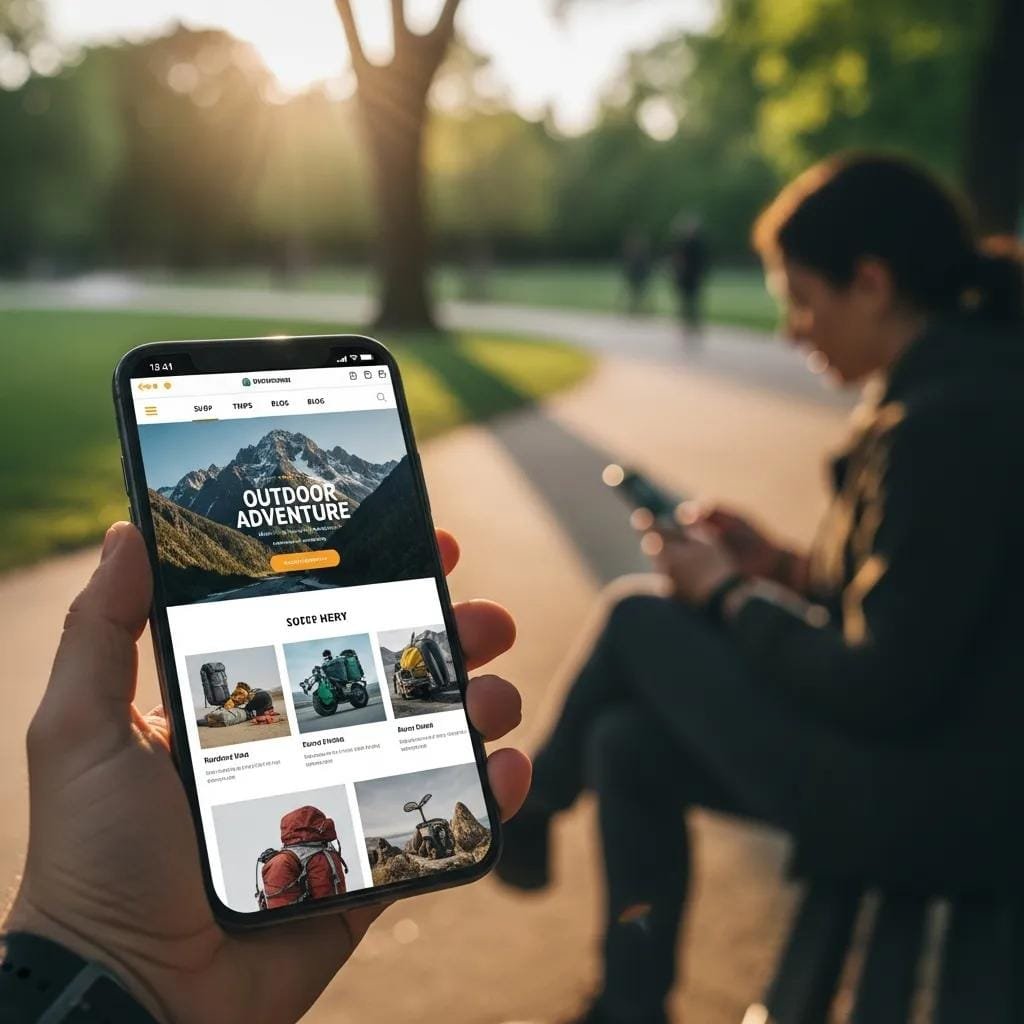
More than half of homeowners search from phones. A mobile‑first layout ensures your site looks and works smoothly on small screens, reducing friction and keeping visitors engaged while they’re on the go.
3. Use a Clear Visual Hierarchy
Lead visitors with a clear visual flow. Use contrast, size, and placement to highlight your main services, testimonials, and contact details. A strong hierarchy helps homeowners find what matters fast and encourages them to dig deeper into your work.
4. Write Headlines That Match Search Intent
Use headlines that answer homeowner queries—examples: “Local Expert Landscaping Services” or “Trusted Paving Contractors Near You.” Clear, targeted headlines attract the right visitors and make them more likely to stay and request a quote.
5. Keep Your Navigation Simple
Make it easy for homeowners to find core info. Use clear labels like “Services,” “About,” and “Contact.” Limit menu items so users aren’t overwhelmed and can quickly get to the details that matter for hiring decisions.
6. Use White Space Strategically
White space boosts readability and gives your site a professional feel. For contractors, it helps service descriptions, photos, and CTAs stand out so homeowners can absorb information and trust your expertise.
7. Place Your Primary CTA Above the Fold
Put your main call to action—“Request a Free Estimate” or “Schedule a Consultation”—where visitors see it without scrolling. Immediate visibility raises engagement and nudges homeowners to take the next step.
8. Add a Visible Search Bar
A search bar helps visitors find specific services or project examples quickly, especially if you offer multiple trades. It reduces frustration and encourages deeper exploration of your site.
9. Use Engaging, Relevant Imagery

Showcase high‑quality photos of finished projects—landscapes, driveways, restorations. Relevant visuals build trust and make your site more appealing, giving homeowners a reason to stay and explore your portfolio.
10. Reduce or Eliminate Pop‑Up Overload
Pop‑ups can capture leads, but too many frustrate visitors. Use them sparingly—try an exit‑intent offer for a free consultation—so you don’t interrupt the browsing experience and drive people away.
11. Break Up Text with Formatting
Use bullets, subheads, and short paragraphs so homeowners can scan quickly. Clear formatting helps people understand services and benefits fast, increasing the chance they’ll contact you.
12. Use Internal Links to Guide Visitors Deeper
Link to related services, project pages, or testimonials to keep visitors exploring. Internal links boost session length and improve SEO by creating a logical site structure.
13. Fix Broken Links and 404 Errors
Regularly scan for broken links and 404s. Dead ends frustrate visitors and raise bounce rates. Keeping links working maintains your professional image and keeps homeowners engaged.
14. Make Your Value Proposition Immediately Clear
State what sets you apart right away—examples: “Licensed & Insured Landscapers with 20+ Years’ Experience.” A strong, clear value proposition helps homeowners quickly understand why they should hire you.
15. Use Video Strategically
Add short videos showing your team at work, customer testimonials, or project walk‑throughs. Video holds attention, explains complex services clearly, and builds trust—encouraging visitors to stay longer and reach out.
16. A/B Test Your Key Pages
Run A/B tests on your homepage, service pages, and CTAs to learn what resonates. Testing gives you data to make better decisions that lower bounce rates and lead to more booked jobs.
How to Track Whether Your Changes Are Working
Use tools like Google Analytics to track bounce rate, average session duration, and pages per session. Those metrics show how homeowners engage with your site and whether your design changes are turning into more inquiries and bookings.
When It’s Time to Bring in a Digital Marketing Partner
If updating your site feels overwhelming, consider working with a digital marketing agency like Demand Convert. They focus on helping contractors optimize websites for homeowner engagement and conversions, delivering tailored solutions that grow your online presence and revenue.
Frequently Asked Questions
What is a good bounce rate for a contractor’s website?
Generally, a good bounce rate falls between 26% and 40%, though it varies by industry and site purpose. For contractors aiming at homeowners, the lower part of that range typically indicates strong engagement and effective site design.
Does bounce rate directly affect SEO rankings?
Bounce rate itself isn’t a direct ranking signal, but a high bounce rate can suggest your content isn’t meeting user needs. Improving engagement and reducing bounce can indirectly help SEO over time.
How long does it take to see improvement after design changes?
You may notice small improvements in a few weeks, but meaningful changes often take 2–3 months as homeowners discover and respond to your updated site and content.
Can I improve my bounce rate without rebuilding my whole website?
Yes. Many impactful fixes—speed optimizations, simpler navigation, clearer content—can reduce bounce without a full site rebuild, saving time and money while improving homeowner engagement.
Subject Matter Context
Core Pillar Connection: This technical guide is part of our High Performance Contractor Web Architecture series. For comprehensive execution and guaranteed results in your local area, review our official protocol: High-Performance Mobile-dominant Contractor Conversion Engines .

 Our Simple Guide to Effective Landing Page Optimization