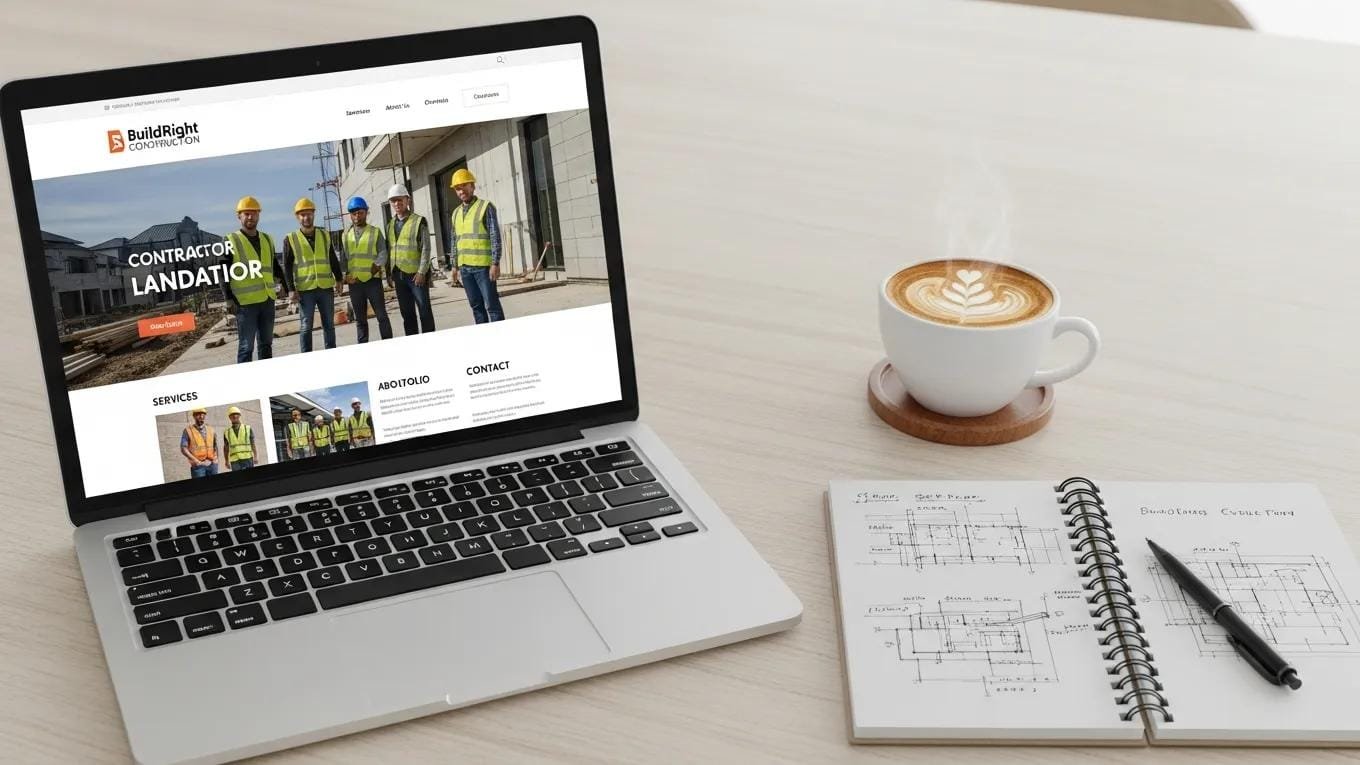
If you install, fix, or maintain homes—plumbers, electricians, roofers, HVAC techs—your landing pages should turn local searches into booked jobs. Well-optimized pages increase conversions, bring in higher-value leads, and grow revenue. This guide lays out straightforward, action-oriented advice built for blue-collar contractors so you can understand what landing page optimization is, why it matters, and how to use it to win more work.
What Is Landing Page Optimization and Why Does It Matter for Contractors?
Landing page optimization is tightening a marketing page so more visitors do the thing you want—request a quote, call, or schedule a job. For contractors, that means building pages that convert curious homeowners into real leads and paying customers. When your landing pages are focused and user-friendly, your advertising dollars turn into booked jobs instead of wasted clicks.
Landing Pages vs. Regular Website Pages: What Contractors Need to Know
Regular website pages give general info about your business. Landing pages focus on one clear outcome—like scheduling a roof inspection or getting a furnace quote. That single-minded focus removes distractions and pushes visitors toward the action that grows your business.
Why Conversion Rate Is More Important Than Traffic Volume for Contractors
Getting lots of visitors is pointless if none of them call. For contractors, a smaller number of highly interested homeowners who convert is far more valuable than large, unfocused traffic. Improving conversion rate means more leads and more booked jobs for the same marketing spend.
The Core Elements of a High-Converting Landing Page for Contractors

High-converting landing pages share the same essentials: a clear headline, simple layout, a strong call-to-action (CTA), social proof, and reliable technical performance. When those pieces work together, homeowners trust you faster and are more likely to hire you.
Research consistently shows that deliberate design and focused optimization lift conversions and prevent the common mistakes that cause drop-offs.
Landing Page Design Impact on Conversion Rates
Landing page structure and design have a measurable effect on conversion rates; targeted optimization helps avoid the typical errors that lead to conversion declines.
The effect of landing page design and structure on conversion rates, M Hylewski, 2025
Headline and Value Proposition: Speak Directly to Homeowners
Your headline should tell homeowners the main benefit in plain language. For example: “Fast, Reliable Plumbing Repairs That Protect Your Home.” A clear promise grabs attention and sets expectations right away.
Above-the-Fold Layout and Visual Hierarchy: Make Key Info Visible
Show the most important elements—your headline, phone number, and CTA—without forcing a scroll. Use size, contrast, and spacing to guide the eye toward the action you want: calling, requesting a quote, or booking online.
Call-to-Action Placement and Copy: Encourage Immediate Action
Place CTA buttons where they’re impossible to miss and use direct, benefit-driven language like “Schedule Your Free Roof Inspection” or “Get Your HVAC Quote Today.” Clear CTAs reduce hesitation and increase leads.
Social Proof, Trust Signals, and Credibility Cues: Build Confidence
Add homeowner testimonials, star ratings, and trust badges such as licenses and insurance information. These quick credibility cues lower skepticism and make it easier for visitors to choose you.
Page Speed and Mobile Responsiveness: Ensure a Smooth Experience
Many homeowners search on phones. Fast-loading, mobile-friendly pages keep visitors engaged and cut bounce rates—both of which boost conversions.
Common Landing Page Mistakes Contractors Make

Contractors often have landing pages that don’t convert because of a few predictable errors. Fixing these will make a big difference.
Trying to Accomplish Too Many Goals on One Page
When a page tries to sell every service, homeowners get confused. Build one page per service or offer so the visitor clearly knows the next step.
Using Weak or Generic CTAs
Buttons that say “Submit” or “Click Here” don’t persuade. Use specific, action-focused CTAs like “Book Your Free Mold Inspection Now” or “Claim Your Roof Repair Estimate” to create urgency and clarity.
Message Mismatch Between Ad Copy and Landing Page
Make sure the landing page matches the ad’s promise. If an ad promotes emergency plumbing and the page shows general services, you’ll lose urgent callers fast.
Ignoring Mobile Users
A page that looks great on desktop but is clunky on mobile will miss many leads. Test pages on phones and tablets to ensure forms, buttons, and text work smoothly.
How to Optimize Your Landing Page Step by Step
Follow these practical steps to turn more visitors into customers and grow your contracting business.
Step 1 – Define a Single Conversion Goal
Pick one outcome—request a quote, schedule an inspection, or call for an estimate. A single goal keeps your messaging tight and your design focused.
Step 2 – Audit Your Current Page Performance
Use tools like Google Analytics to check bounce rate, time on page, and conversion rate. These metrics point to where fixes are needed.
Step 3 – Rewrite the Headline and CTA First
Start with the headline and CTA because they shape visitor expectations. Write versions that speak to homeowner pain points and test which performs best.
Step 4 – Improve Load Speed and Mobile Experience
Compress images, trim unnecessary scripts, and use a responsive layout. Faster pages keep visitors on the page and moving toward conversion.
Step 5 – Run A/B Tests and Iterate
Test different headlines, CTAs, and layouts to see what boosts conversions. Use the data to make incremental improvements over time.
How to Measure Landing Page Performance
Track the right metrics so you know what’s working and where to focus your optimization efforts.
The Metrics That Actually Matter
Key metrics to watch:
- Conversion Rate: The share of visitors who complete your goal.
- Bounce Rate: How many leave without engaging.
- Time on Page and Scroll Depth: How engaged visitors are with your content.
- Cost Per Conversion: How much you spend to acquire each lead or booked job.
How to Read Your Results and Decide What to Change
Look for patterns: a high bounce rate often signals unclear messaging or slow load times; low time on page can mean the content doesn’t match expectations. Use those signals to prioritize fixes—start where the biggest impact is likely.
When to Bring in a Professional
Sometimes outside expertise accelerates results—especially when performance stalls or you lack internal time and tools.
Signs Your Landing Page Needs Expert Help
If conversions stay low despite updates, your traffic costs keep rising, or you struggle to set up reliable tests, a specialist can diagnose problems and apply proven fixes.
What a Results-Driven Agency Does Differently
A focused agency combines data analysis, UX know-how, and creative testing to lift conversion rates—helping contractors attract more qualified homeowners and win higher-value jobs.
Frequently Asked Questions
What is a good landing page conversion rate for contractors?
A typical benchmark is 2%–5%, but targeted optimization and clear messaging can push that higher depending on your market and offer.
How long does it take to see results from landing page optimization?
Many contractors notice improvements within 4–8 weeks after making changes; continual testing yields steady gains over time.
Should I optimize my landing page before or after launching ads?
Optimize before you launch ads. A well-built landing page gives your ad spend the best chance to convert right away.
To further improve performance, consider exploring our eCommerce web design options—these services can boost engagement and conversion for product-focused pages.
If you need targeted visitors, our PPC services help put your landing pages in front of the right homeowners.
For online stores, optimizing eCommerce PPC campaigns can increase sales and ROI.
Automating your product feeds with shopping feed automation improves visibility and saves time.
Pairing landing pages with a focused social media marketing plan brings relevant traffic and builds local awareness.
And a polished, user-friendly website built with our web design services makes every campaign perform better by giving homeowners a stronger first impression.
Subject Matter Context
Core Pillar Connection: This technical guide is part of our High Performance Contractor Web Architecture series. For comprehensive execution and guaranteed results in your local area, review our official protocol: High-Performance Mobile-dominant Contractor Conversion Engines .

 Engineer Your Success: Why High-Ticket Trades Must Prioritize Value Over Volume