
SEO, or Search Engine Optimization, is how homeowners searching for services like plumbing, roofing, or HVAC find your contracting business online. By shaping your website and online presence to match what people search for, you attract more qualified leads and win the higher‑value trade jobs that grow your revenue. This article breaks down what SEO is, why it matters for blue‑collar contractors, and how to start using it effectively to own local search and build trust with homeowners.
What Does SEO Stand For and Why Is It Critical for Contractors?
SEO stands for Search Engine Optimization — improving your website so it ranks higher for relevant search queries. For contractors—plumbers, electricians, landscapers—this means homeowners can find you when they need you. SEO isn’t a one‑time tweak; it’s an ongoing process that keeps leads steady and helps you stay ahead of competitors.
Understanding SEO: The Basics for Contractors
SEO covers the techniques that help search engines crawl, index, and rank your pages. Crawling discovers your content, indexing stores it, and ranking decides the order in results. For contractors, good rankings put you in front of homeowners searching terms like “emergency plumbing repair” or “roof replacement near me.”
The Three Pillars of SEO Every Contractor Should Master
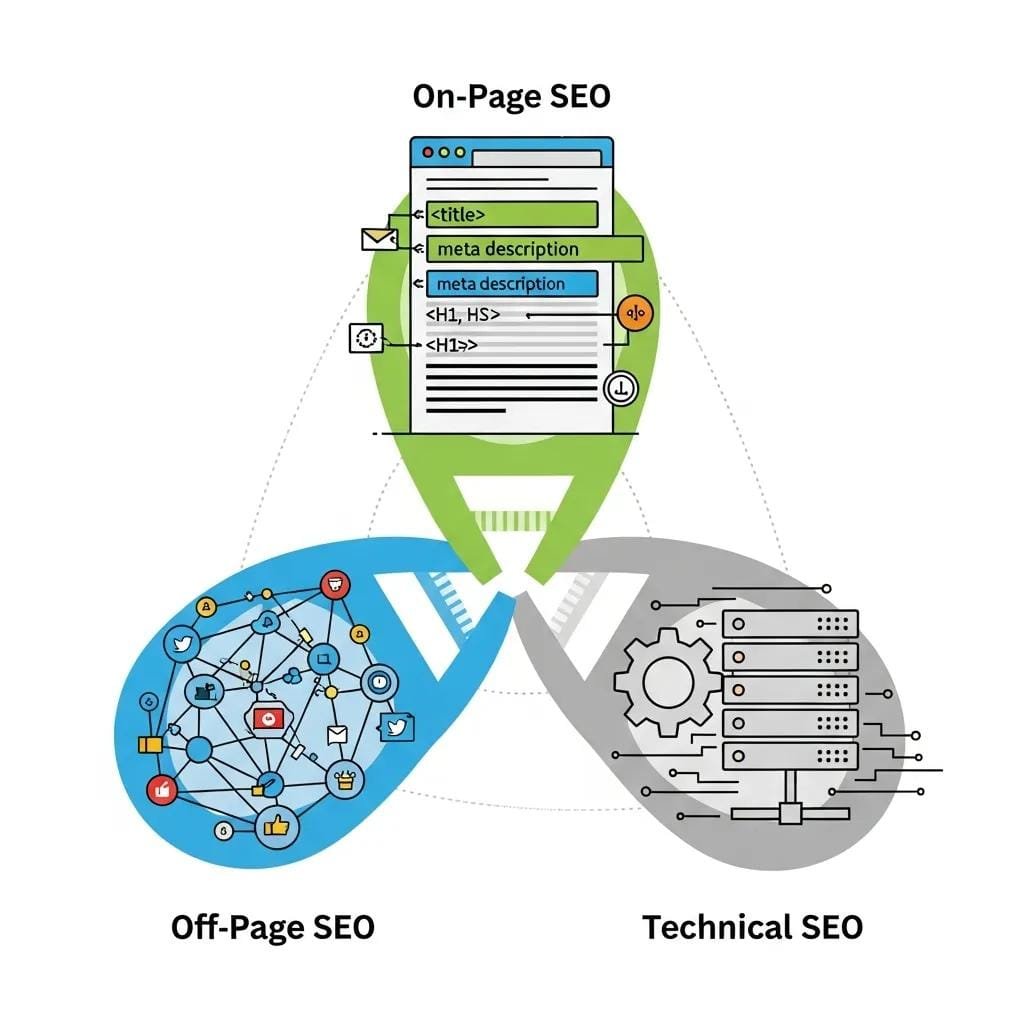
SEO for contractors breaks into three core areas: on‑page, off‑page, and technical SEO. Master these pillars and your website will be set to attract homeowners and convert visits into paying jobs.
On-Page SEO: Optimizing Your Website Content
On‑page SEO means making each page clear, relevant, and useful to homeowners searching for your services. Use target phrases like “licensed electrician in [city]” naturally, optimize meta titles and descriptions, and label images with helpful alt text. Well‑structured, answer‑focused content that addresses homeowners’ questions builds trust and lifts rankings.
Off-Page SEO: Building Your Online Reputation
Off‑page SEO is about growing your site’s authority through backlinks and social proof. For contractors, that looks like listings in local directories, links from industry partners, and positive customer reviews. Mentions in local news, blogs, and active social profiles also boost credibility with both search engines and homeowners.
Technical SEO: Ensuring Your Website Works Flawlessly
Technical SEO focuses on the backend—site speed, mobile usability, and clean site architecture. Too many homeowners search on phones, so a fast, mobile‑friendly site is non‑negotiable. Proper structure and structured data help search engines understand your services and can trigger rich results that make your listing more compelling.
Why SEO Matters for Blue-Collar Contractors and How It Drives Revenue
SEO is essential for contractors who want more visibility from local homeowners and a steady stream of high‑value jobs. A well‑optimized site brings organic traffic—homeowners finding you without paid ads—which usually converts better and compounds over time, increasing revenue.
Appearing at the top of search results directly affects a contractor’s ability to generate leads and build trust in competitive local markets.
Search Engine Visibility for Marketing Goals
Search visibility is a key driver of marketing and business outcomes. As customers increasingly look for services via search, organizations must appear near the top of results to be discovered. That makes search engine marketing and SEO tools essential for improving where and how often your information appears.
A framework for constructing optimisation models to increase the visibility of organizations’ information in search engines, A Miklosik, 2019
For contractors, SEO isn’t just about raw traffic — it’s about connecting with homeowners who are ready to hire for projects like foundation repair, mold remediation, or deck construction.
SEO for Business Visibility & Marketing Strategy
Digital transformation and strong offline/online competition make SEO a required part of a modern marketing strategy. SEO increases online visibility versus competitors and improves how businesses communicate with potential customers across different search intents.
Business optimization in the digital age: Insights and recommendations, A Natorina, 2020
Effective SEO helps contractors build brand awareness and convert visitors into customers, which directly impacts sales and long‑term growth.
SEO Strategies for Website Visibility & Conversions
Research shows that a focused SEO strategy can significantly boost visibility and organic traffic, which supports greater brand awareness, more visitors, and higher potential for sales conversions.
Optimizing SEO (Search Engine Optimizing) strategy to increase visibility and achievement of marketing goals, DI Jusuf, 2023
To support your SEO work and turn visitors into customers, consider exploring web design services for contractors tailored to trade businesses.
SEO vs. Paid Search: What Contractors Need to Know
SEO targets organic search results, while paid search pays to appear at the top. SEO takes longer to show results but builds sustainable growth; paid search drives immediate leads but stops when the budget does. Most contractors get the best results by balancing both approaches.
For immediate lead generation, PPC services can help target homeowners actively searching for services.
Local SEO: The Game-Changer for Small Contracting Businesses
Local SEO helps your business show up for homeowners in your service area. This matters most for small businesses—pest control, power washing, excavation—that rely on nearby customers. Optimize your Google Business Profile, earn local backlinks, and keep consistent Name, Address, and Phone (NAP) details across directories to improve local visibility.
How Contractors Can Get Started with SEO Today
Starting SEO means taking clear, practical steps that improve visibility and attract homeowners ready to hire.
Start with an SEO Audit
Begin by auditing your website to find strengths and weak points. Use tools like Google Analytics and SEMrush to review content, technical issues, and your backlink profile. The audit highlights where to focus and what will move the needle fastest.
Build Around the Right Keywords
Research the exact phrases homeowners use when searching for your services. A roofer might target “roof repair in [city]” or “emergency roof leak fix.” Tools like Google Keyword Planner and Ahrefs help you find keywords with good search volume and achievable competition.
Create Content That Answers Homeowners’ Real Questions
Produce helpful content that answers the real concerns homeowners have. For example, a mold removal company can publish guides on spotting mold and health risks. Useful content builds trust and positions your business as the local expert.
Common SEO Mistakes Contractors Should Avoid

Avoid these common pitfalls so your SEO work actually produces more homeowner leads and high‑value jobs:
- Ignoring Mobile Optimization: Many homeowners search on phones. If your site isn’t mobile‑friendly and fast, you’ll lose both rankings and potential customers.
- Neglecting Content Quality: Thin or irrelevant content pushes visitors away and hurts rankings. Focus on clear, helpful content that answers homeowner questions.
- Overlooking Analytics: Without tracking performance, you can’t tell what’s working. Regularly review analytics and adjust your strategy based on data.
Frequently Asked Questions About SEO for Contractors
What does SEO stand for?
SEO stands for Search Engine Optimization — improving your website so it ranks higher in search results and attracts homeowners looking for your services.
What is the difference between SEO and paid search?
SEO builds long‑term, organic visibility, while paid search pays for immediate placement in search results.
How long does SEO take to work?
SEO typically takes about 3–6 months to show noticeable results, depending on competition and how well strategies are executed.
Do I need an SEO agency or can I do SEO myself?
You can handle some SEO yourself, but an agency brings expertise, saves time, and keeps you current with best practices.

 How to Market Your Small Trade Business on Social Media — and Actually Get Results