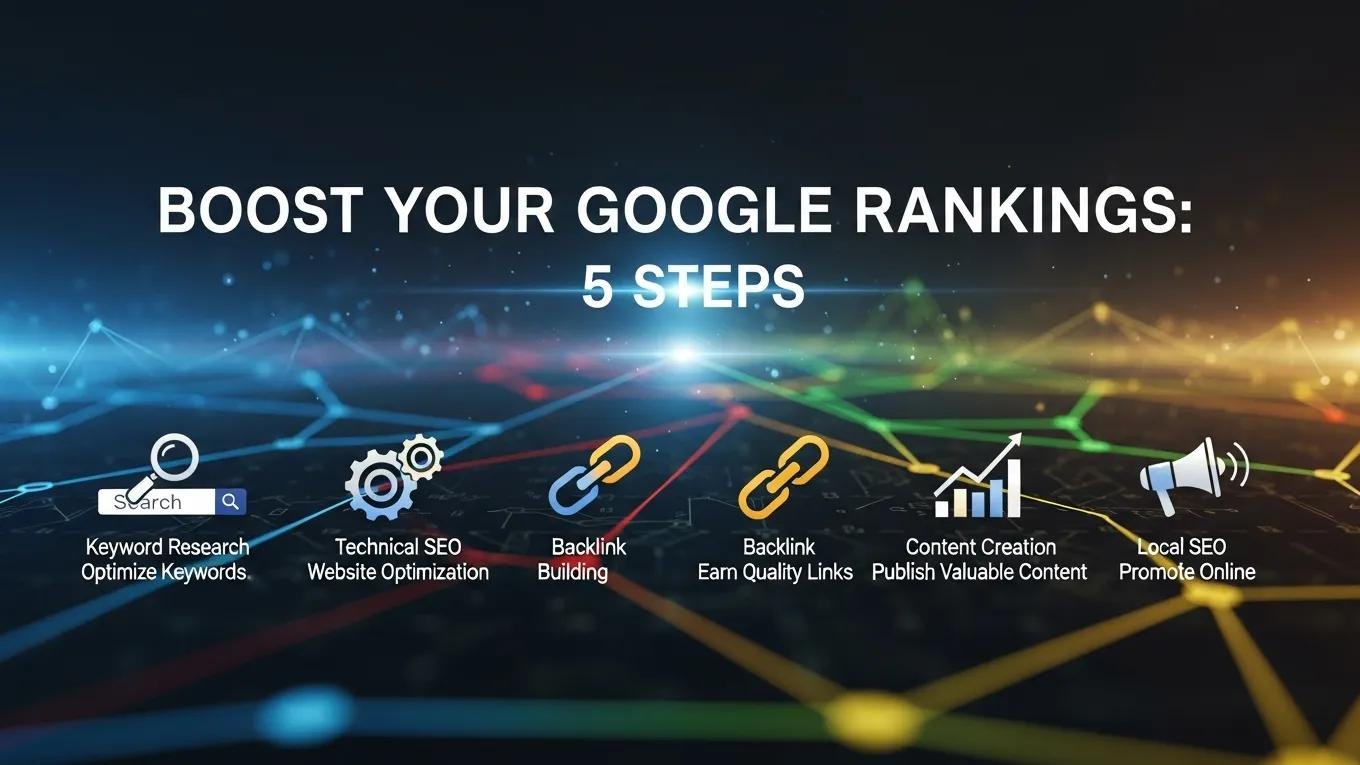
Improving your Google search results is one of the fastest ways to drive traffic and grow revenue—especially for local blue‑collar contractors like plumbers, electricians, roofers, and HVAC companies. These trades often struggle to appear where homeowners search for high‑value services. This article lays out clear, practical steps to lift your search rankings so you attract more homeowners and win better jobs. By tightening your on‑page SEO, targeting the right keywords, publishing useful content, fixing technical issues, and earning quality backlinks, you can position your business as the trusted local expert. Demand Convert, a digital marketing agency focused on web design and SEO, can help you implement these tactics and turn visibility into booked work.
Why Your Google Rankings Are a Revenue Problem
If your site doesn’t show up on page one, you’re missing the homeowners who are ready to hire. Low rankings mean fewer calls, fewer booked jobs, and smaller revenues. Most people don’t click past the first page, so improving visibility is essential for capturing high‑value trade work.
What Low Search Visibility Actually Costs You
Hidden websites lose real dollars. For example, a local electrician making $100,000 a year could miss as much as $75,000 simply because homeowners can’t find their services online. That lost visibility translates to fewer leads, fewer bookings, and stalled growth.
What ‘Improved’ Rankings Look Like for Local Contractors
For roofers, HVAC techs, and similar trades, better rankings mean more calls from homeowners, higher booking rates, and steady revenue growth. Businesses that improve their search presence typically see a steady rise in qualified leads and conversions. Demand Convert’s clients have turned improved SEO into measurable business gains.
Step 1 — Optimize Your On-Page SEO Foundations
On‑page SEO is the foundation that makes your website understandable to search engines and useful to homeowners. For contractors, that means clear service pages, straightforward language about what you do, and keywords that match what local homeowners actually type into Google.
Title Tags, Meta Descriptions, and Why They’re Your First Impression
Your title tag and meta description are your pitch in search results. Use concise titles that include core services like “plumbing repair” or “roof replacement,” and write meta descriptions that tell homeowners exactly how you solve their problem. Better messaging means higher click‑through rates from search.
How to Structure Headers So Google Understands Your Page
A clean header hierarchy (H1, H2, H3) helps both people and search engines. Your H1 could be “Expert Plumbing Services in [Your City],” with H2s covering specific services like “Emergency Leak Repair” and “Water Heater Installation.” That structure makes it easy for homeowners — and Google — to find the right information fast.
Internal Linking — Helping Google Navigate Your Site
Link related pages together so visitors and search engines can move through your site naturally. For example, link a “Drain Cleaning” page to an “Emergency Plumbing” page. Smart internal links improve crawlability and keep homeowners exploring your services.
Demand Convert provides on‑page SEO tailored for contractors, helping you organize pages, refine messaging, and convert visitors into calls and bookings.
Step 2 — Target the Right Keywords for Your Business
Picking the right keywords puts you in front of homeowners who are actively searching for your services. Understand what they want—information, a quote, or immediate service—and craft content that answers that need.
How to Find Keywords Your Customers Are Actually Searching
Use keyword research tools to discover the phrases homeowners use, like “emergency electrician near me” or “best roofing contractor.” Check whether the intent is informational, commercial, or urgent, and write content that matches that intent.
AI‑assisted keyword tools can speed up this process by spotting patterns in homeowner searches and refining your SEM and organic targeting.
AI-Driven Keyword Optimization & Search Intent for SEM Success
Rising digital ad spend makes smarter optimization essential. This approach combines AI algorithms with search‑intent prediction to improve SEM keyword performance. Using layered clustering and predictive models to analyze search behavior and automatically adjust bids, experiments on e‑commerce data showed a 23.5% drop in cost‑per‑click (CPC) and a 52.9% increase in return on ad spend (ROAS).
AI-Driven SEM Keyword Optimization and Consumer Search Intent Prediction: An Intelligent Approach to Search Engine Marketing, M Sun, 2025
Short-Tail vs. Long-Tail Keywords — What Should You Prioritize?
Short‑tail terms like “plumber” get volume, but long‑tail phrases such as “24‑hour emergency plumber in [City]” often convert better because they match a homeowner’s specific need. Focus on long‑tail keywords to capture people who are ready to book.
How to Map Keywords to the Right Pages
Assign keywords to the most relevant pages—“roof repair” on your roofing page, “HVAC installation” on your HVAC page. That targeted mapping increases the chance each page ranks for searches that lead to booked work.
Demand Convert can help with keyword research and page mapping so your site targets the terms that drive the most qualified leads.
Step 3 — Build Content That Earns Rankings
Useful, well‑organized content that answers homeowners’ questions is what ranks. Show your expertise, solve common problems, and build trust with clear, helpful information.
The Content Quality Signals Google Rewards in 2026
Google favors content that demonstrates expertise, authority, and trust. For contractors, that means detailed service pages, clear how‑to guides, and real customer testimonials that reassure homeowners you do the job right.
How to Match Your Content Format to Search Intent
Pick formats based on what homeowners expect. Quick answer lists work for “How to stop a leaking faucet,” while long guides are better for “Complete roof replacement checklist.” Match format to intent to keep readers engaged and more likely to convert.
How Often Should You Publish New Content?
Regular updates show Google your site is active. Aim for a steady cadence—whether that’s monthly blog posts or frequent service updates—so homeowners keep returning and search engines see ongoing relevance.
Step 4 — Fix the Technical SEO Issues Holding You Back
Technical SEO makes sure your site runs fast and that Google can crawl and index your pages. These fixes are essential for competitive rankings.
Page Speed and Core Web Vitals — The Basics You Can’t Skip
Slow pages frustrate visitors and hurt rankings. Google’s Core Web Vitals measure loading and interactivity, so improving metrics like LCP and CLS keeps homeowners on your site and supports better positions in search.
Research shows even small page load delays raise bounce rates and reduce conversions, which directly affects revenue.
Optimizing Web Vitals for Enhanced Online Business Performance
Fast, reliable web experiences are now table stakes for online success. This overview covers web performance tools—Lighthouse, PageSpeed Insights, and WebPageTest—and explains why optimizing core web vitals like LCP and FID matters for bounce rate, conversions, and time on site. Studies show that even small degradations in LCP, CLS, and FID can negatively impact these business metrics.
Web performance tooling and the importance of web vitals, MK Dobbala, 2022
Mobile Optimization — Why Google Ranks Your Mobile Version First
Most homeowners search from their phones. Google indexes mobile versions first, so your site must be responsive, easy to navigate, and fast on mobile devices to keep rankings and deliver a smooth user experience.
Crawlability and Indexation — Can Google Actually Read Your Site?
Fix broken links, avoid duplicate pages, and make sure your robots.txt and sitemap are correct. These technical housekeeping items help Google find and index your pages, improving your chances of ranking.
Step 5 — Build Backlinks That Signal Authority

Backlinks from respected sites tell Google your content is trustworthy. For local contractors, links from business directories, trade associations, and local partners help boost authority and make homeowners more likely to trust your business.
Why Backlinks Still Drive Rankings
Quality backlinks remain a top ranking signal because they act like votes of confidence from other sites. Links from reputable sources increase visibility and help homeowners view your business as credible.
Practical Link Building Strategies for SMBs Without a Big Budget
Small contractors can earn links by guest posting on local home improvement blogs, creating useful assets like seasonal maintenance checklists, and partnering with suppliers or local organizations. These low‑cost tactics build authority without a large budget.
What to Avoid — Link Schemes That Hurt More Than Help
Steer clear of paid link networks, link farms, and other black‑hat tactics. These shortcuts can trigger Google penalties and damage your reputation with homeowners.
How Long Does It Take to Improve Google Search Results?
SEO is a marathon, not a sprint. With consistent, tactical work, contractors typically see meaningful improvements in 3–6 months, though results depend on competition and the current state of your site.
A Realistic Timeline for Each of the 5 Steps
On‑page tweaks and targeted keywords can deliver early gains in weeks. Content creation, technical fixes, and backlink building usually take longer to move the needle. Expect steady progress rather than overnight wins.
What You Can Control — and What You Can’t
You control the actions you take—content, pages, and outreach—but external factors like Google algorithm updates and market changes also play a role. Stay flexible and keep optimizing to achieve long‑term growth.
When to Bring In an SEO Partner
Bringing in experts can speed results and free you to run the business. An experienced agency helps you scale your marketing and avoid costly mistakes.
Signs You’ve Hit the DIY Ceiling
If leads have plateaued despite your efforts, or SEO tasks are draining your time, it’s a good sign to get help. Agencies bring process, tools, and experience that accelerate growth.
What to Look for in an SEO Agency
Choose an agency with a track record for local businesses and contractors. Look for transparent reporting, practical strategies, and clear alignment with your goals of attracting homeowners and winning high‑value jobs.
Frequently Asked Questions
What is the fastest way to improve Google search results?
Start with on‑page SEO: refine title tags, meta descriptions, and page content to match what homeowners search for. Those fixes usually deliver the quickest wins.
How do I check where my website currently ranks on Google?
Use tools like Google Search Console, SEMrush, or Ahrefs to track keyword rankings and monitor changes over time.
Can I improve my Google rankings without paying for ads?
Yes. Organic SEO—content, keyword optimization, and backlinks—can improve rankings and traffic without paid campaigns.
How much does professional SEO cost for a small business?
Costs vary by scope, but small contractors can expect to invest roughly $500 to $5,000 per month depending on goals and services required.

 How Local Contractors Can Have the Best SEO Among The Competitors