
A thoughtful keyword strategy is a must for growing visibility and generating leads—especially for local, blue‑collar contractors like plumbers, electricians, roofers, and HVAC companies. This article walks you through a practical, future‑ready approach to keyword selection that aligns with homeowner intent and drives conversions. Many contractors waste time on keywords that don’t match their audience. Below, we’ll cover common mistakes, the two complementary layers of a resilient keyword strategy, and clear steps you can take to build one that actually works.
Why Most Keyword Strategies Fail Before They Start

Many keyword plans break down early because they’re built on the wrong assumptions. Chasing high‑competition keywords too soon burns resources and morale. Equally common is choosing keywords based only on search volume—without matching homeowner intent—so the traffic you get isn’t ready to hire. And when keyword work is disconnected from broader business goals, even well‑ranked pages can fail to generate real revenue. Recognizing these traps is the first step toward a keyword strategy that produces measurable results for contractors serving homeowners.
The Two Layers of a Future-Proof Keyword Strategy
A durable keyword strategy combines two complementary layers. Each serves a clear purpose: one for quick visibility, the other for long‑term authority.
Layer 1 — Quick-Win Keywords for Immediate Visibility
Quick‑win keywords deliver faster traffic and are typically lower in competition. Use tools to find terms with reasonable search volume and manageable difficulty. For example, a plumber might target “emergency plumbing repair near me” or an electrician could aim for “residential electrical services in [city].” These targets help contractors show up for ready local customers and start generating leads quickly.
Layer 2 — Strategic Keywords for Long-Term Authority
Strategic keywords are more specific—often long‑tail—and build lasting relevance. They may not bring instant traffic, but they capture homeowners with clearer intent and trust potential. Examples include “best roofing materials for storm damage in [region]” or “energy-efficient heating solutions for homes.” Over time, these pages establish your expertise and attract higher‑quality leads and repeat business.
How to Build a Keyword Strategy Step by Step
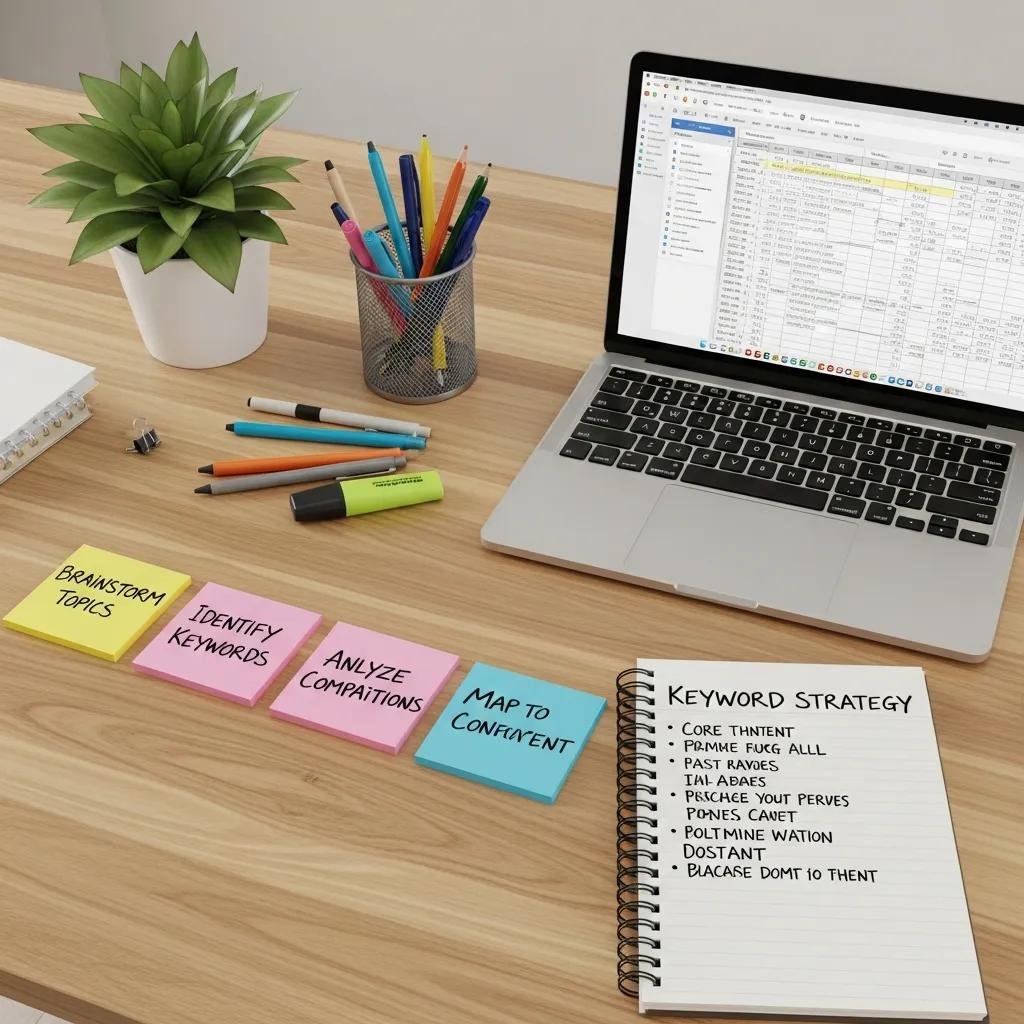
Follow these practical steps to build a keyword plan that aligns with your services and market.
- Define Business Goals and Revenue Intent: Start by mapping your business goals to keyword intent. Which services produce the most revenue? Which customer types are you trying to attract? That clarity guides every keyword decision.
- Map Keywords to the Buyer Journey: Assign keywords to awareness, consideration, and decision stages. This ensures you reach homeowners at the right moment—whether they’re researching problems or ready to book a contractor.
- Evaluate Keyword Difficulty vs. Search Volume: Balance effort and reward. Prioritize keywords you can realistically rank for now while planning for higher‑value targets as your site authority grows.
- Group Keywords Into Topic Clusters: Organize related terms around core service pages. A landscaper, for example, might cluster “garden design,” “lawn care,” and “seasonal planting.” Clusters improve SEO and give homeowners a coherent content experience.
- Prioritize and Build the Content Roadmap: Rank opportunities by business impact and effort required. Then create a phased content plan that targets quick wins first and strategic topics over time.
Demand Convert delivers a full keyword strategy service that combines research, intent analysis, and conversion optimization tailored to local contractors. Using data‑driven recommendations, we help businesses implement these steps to improve online visibility and grow revenue.
Aligning Keyword Strategy With Business Growth
Keywords should do more than drive traffic—they should drive the right traffic that converts into jobs and revenue. Consider local, regional, and broader market approaches so you reach homeowners where they search. When keywords are tied to revenue goals and sales processes, your SEO becomes a predictable growth channel rather than a guessing game.
What a Professional Keyword Strategy Looks Like in Practice
A professional strategy is data‑driven, repeatable, and continuously optimized. Demand Convert follows a structured process: deep keyword research, competitive analysis, content mapping, and ongoing performance tracking. That approach helps contractors adapt to market changes, improve conversion rates, and boost brand visibility among homeowners.
Frequently Asked Questions
- How many keywords should a business target in its SEO strategy? Aim for a balanced mix of short‑ and long‑tail keywords. Quality and intent matter more than sheer quantity—focus on terms that match services and buyer intent.
- What is the difference between short-tail and long-tail keywords? Short‑tail keywords are broad (one or two words) with high volume and competition. Long‑tail keywords are longer, more specific phrases that usually have lower competition and better conversion potential.
- How often should a keyword strategy be updated? Review and refresh your strategy regularly—typically every 6–12 months—to reflect market shifts, homeowner behavior, and evolving business goals.
Subject Matter Context
Core Pillar Connection: This technical guide is part of our High Performance Contractor Web Architecture series. For comprehensive execution and guaranteed results in your local area, review our official protocol: High-Performance Mobile-dominant Contractor Conversion Engines .

 Map-Pack Domination: The Technical Blueprint for Contractor Proximity Expansion