
Local contractors—plumbers, electricians, roofers, HVAC pros—depend on targeted advertising to reach homeowners and win high-value jobs. Getting the most from your Google Ads budget means every dollar should help generate calls, estimates, and booked work. This guide lays out practical, contractor-focused steps to tighten your spend, avoid common mistakes, and convert searches into real leads from local homeowners.
Google Ads (formerly AdWords) gives contractors a direct line to homeowners actively searching for services. When campaigns and budgets are set up with intention, your ads become a steady source of the kind of jobs that move your business forward.
Google Ads Budget Optimization & ROI Enhancement
Chapter 42 explores Google Ads—originally launched in 2000 and rebranded in 2018—as a foundational tool in digital marketing. The platform lets advertisers target users across search, websites, YouTube, and apps using keywords, demographics, and behavior signals to increase ad relevance and engagement. Advertisers bid on keywords so the most relevant ads appear when users search, driving clicks that can turn into conversions. Robust analytics let you measure performance, refine tactics, and improve return on ad spend.
Using Google Ads in digital marketing, K. Solberg Söilen, 2024
Why Most Google Ads Budgets Fall Short for Contractors
Too many contractors pour money into Google Ads without clear goals, precise keywords, or reliable conversion tracking. The result is wasted spend and missed homeowner opportunities. Smart AdWords (Google Ads) spending starts with a plan that matches your business objectives and a routine of continuous optimization to focus on high-value jobs.
Why Ad Spend Gets Wasted
Common ways contractors lose budget include:
- No Clear Goals: Campaigns without specific outcomes attract clicks that rarely become homeowner leads.
- Poor Keyword Targeting: Failing to use negative keywords or target phrases properly lets irrelevant searches drain your budget.
- No Conversion Tracking: Without tracking calls, form fills, or booked jobs, you can’t tell which ads actually drive revenue.
Fixing these basics is the first step to turning ad spend into profitable leads.
What Efficient Google Ads Spending Looks Like
Efficient ad spend for contractors focuses on:
- Clear Campaign Goals: Measurable outcomes such as booked estimates or inbound calls.
- Targeted Keyword Plans: Positive and negative keywords that point your ads at homeowners actively searching for your services.
- Regular Performance Reviews: Ongoing data analysis to tighten campaigns and raise ROI.
Apply these practices to make your advertising budget work harder and win more high-value jobs.
Tip 1 — Set Clear Campaign Goals Before You Spend a Dollar
Start every campaign by naming one or two measurable goals—calls for emergency repairs, booked estimates, or lead form submissions. Clear objectives guide budget allocation and make it possible to judge success.
If you want expert help, Demand Convert’s PPC services align paid campaigns with your business goals to get better results from every ad dollar.
Tip 2 — Build a Negative Keyword List to Block Irrelevant Clicks
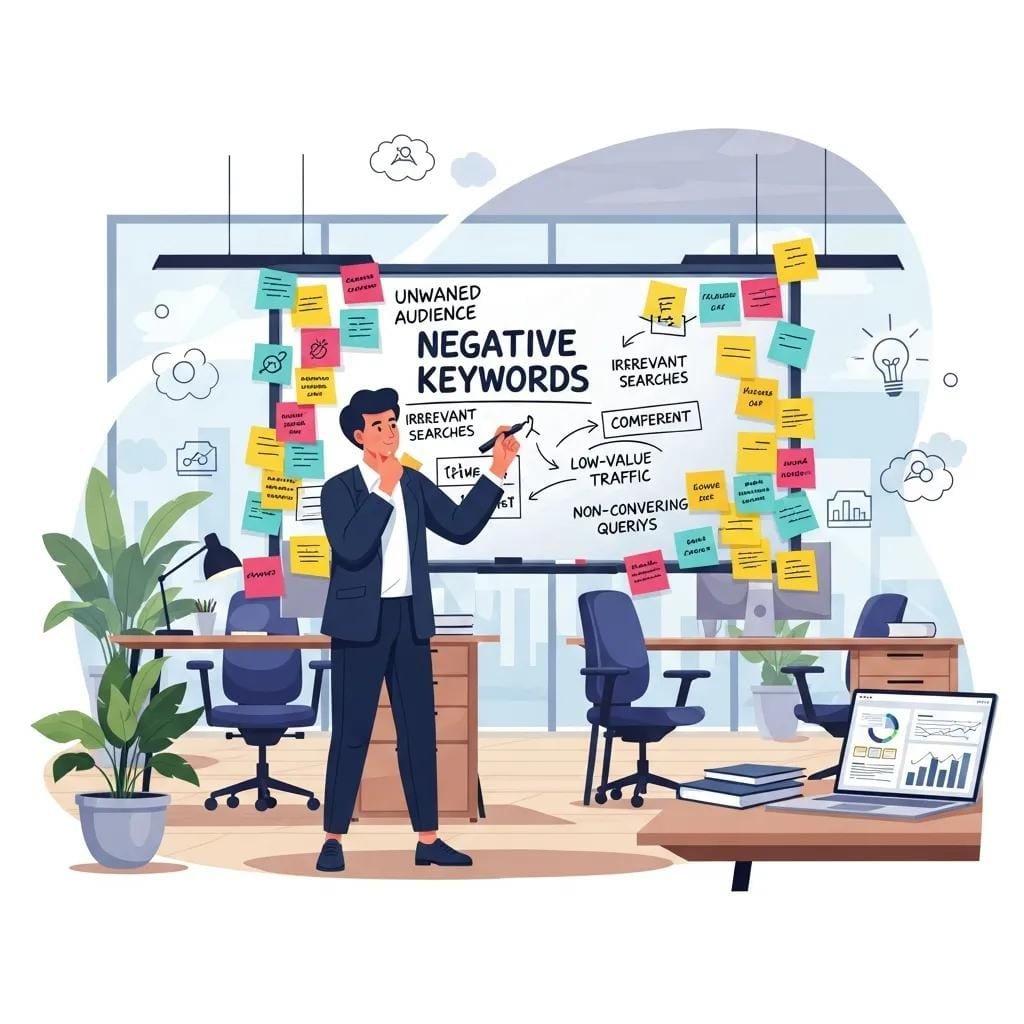
Negative keywords stop your ads from showing on searches that won’t convert—terms like “free,” “DIY,” or unrelated services. For example, if you only install roofs, exclude queries for “roof cleaning” or “pressure washing.” That preserves budget and improves lead quality.
Tip 3 — Improve Your Quality Score to Lower Cost-Per-Click
Quality Score influences how much you pay per click and where your ads appear. Raise your score by matching your ad copy to keywords, sending traffic to relevant landing pages, and writing compelling offers that encourage clicks.
Evidence shows that ad relevance, CTR, and landing page experience are major drivers of campaign cost and performance—so investing in quality pays.
Google Ads Campaign Quality & Performance Optimization
Even with many ad channels available, Google Ads remains central to digital strategies. A systematic review of research from 2007–2024 highlights campaign quality factors—ad relevance, click-through rate, landing page experience, and conversion rate—that shape outcomes. The review presents a conceptual framework linking these elements to performance and offers data-driven tactics for optimization. It also lists the key metrics marketers should track to evaluate campaign results.
The relationship between campaign quality and performance in Google Ads: a systematic review, M Shemshaki, 2025
How Quality Score Quietly Raises Your Costs
A low Quality Score forces higher bids to win placements, driving costs up without better results. Improving your Quality Score—through more relevant ads and better landing pages—keeps your budget efficient.
Three Quick Wins to Improve Your Quality Score
- Make Ads Relevant: Use language in your ads that matches what homeowners type when searching for services.
- Optimize Landing Pages: Match landing page content to the ad and make it fast and easy to act.
- Raise CTR: Use clear, benefit-driven calls to action to get more clicks from interested homeowners.
Tip 4 — Set Up Conversion Tracking Before You Scale Any Campaign

Conversion tracking shows which ads and keywords drive calls, form fills, and booked jobs. Configure tracking first so any budget increases go toward campaigns that demonstrably produce results.
Tip 5 — Tighten Your Keyword Match Types
Using the right match types helps you reach homeowners more precisely and avoid wasted clicks.
Match Type Comparison and When to Use Each
Know the differences:
- Broad Match: Casts a wide net but can pull in irrelevant queries.
- Phrase Match: Targets specific phrases, offering more control over who sees your ad.
- Exact Match: Shows your ad only for precise searches—best for maximum relevance.
How to Audit and Tighten Match Types in an Existing Campaign
Review match-type performance regularly. Move poorly performing broad-match keywords to phrase or exact, and add negatives where needed. Small adjustments reduce wasted spend and increase relevance.
Tip 6 — Use Ad Scheduling to Bid When Conversions Are Most Likely
Ad scheduling lets you show ads when homeowners are most likely to search—weekday mornings for service calls or weekends for estimate requests. Bidding higher during high-conversion windows gets you better results for the same budget.
Tip 7 — Choose the Right Bidding Strategy for Your Campaign Stage
Pick bidding strategies that match your goals and campaign size. Early-stage campaigns often do best with manual bids for control; mature campaigns can benefit from smart bidding to automate optimization.
Comparative research across PPC platforms underscores how the right bidding approach influences ROI and campaign effectiveness.
Maximizing PPC ROI: Google Ads Performance & Bidding Strategies
PPC advertising enables precise targeting of potential customers. Comparative analyses of Google Ads and social platforms (Facebook, Instagram, LinkedIn) evaluate metrics like CTR, CPC, and ROAS to identify where each platform performs best. Studies examine real campaign data, audience targeting, bidding methods, and other factors that affect ad performance, offering practical recommendations for maximizing return on ad spend.
Performance Insights from Cross-Platform PPC Advertising: A Case Study on Google and Social Media Campaigns
Manual Bidding vs. Smart Bidding — When Each Wins
- Manual Bidding: Best for tight control when you have clear, specific goals.
- Smart Bidding: Uses machine learning to optimize bids in real time—ideal for larger campaigns with varied homeowner segments.
Tip 8 — Send Every Ad to a Dedicated, Optimized Landing Page
Send clicks to a landing page built for the ad’s promise. A focused page that answers homeowners’ questions and makes the next step obvious will lift your conversion rates.
The Key Elements of a High-Converting PPC Landing Page
- Clear Call to Action: Tell homeowners exactly what to do next—“Request a Free Estimate” or “Call for Same-Day Service.”
- Relevant Content: Match the landing page to the ad and address the homeowner’s need quickly.
- Mobile-Friendly Design: Ensure a fast, easy experience on phones where most searches happen.
How Landing Page Quality Affects Your Quality Score and CPC
Better landing pages raise your Quality Score, which lowers CPC and improves ad position. Landing page optimization is one of the most cost-effective ways to improve Google Ads performance.
Tip 9 — Run Monthly Audits and Pause What Isn’t Converting
Monthly audits show which ads and keywords actually drive homeowner leads. Pause or rework the parts that don’t convert so your budget focuses on what does.
A Simple Monthly Google Ads Audit Checklist
- Review Conversions: See which ads lead to calls, form submissions, or booked jobs.
- Check Keyword Performance: Identify keywords that burn budget without producing leads.
- Adjust Bids: Raise bids on winners and lower or pause underperformers.
When Professional PPC Management Pays for Itself
Hiring professional PPC management can pay off by applying tested strategies and freeing you to run your business. Expert management often delivers more homeowner leads and higher revenue, offsetting the cost.
Frequently Asked Questions About Maximizing Your Google Ads Budget
What is a good AdWords budget for a small contracting business?
Many small contractors start with $500–$1,500 per month, depending on local competition and service area. That range typically provides enough data to optimize campaigns and attract homeowner leads.
How do I know if my AdWords budget is being wasted?
Watch metrics like click-through rate, conversion rate, and Quality Score. If those are low, you’re likely paying for irrelevant clicks or poorly performing ads.
What is the fastest way to improve Google Ads performance?
The quickest gains come from improving Quality Score—tighten ad relevance, optimize landing pages, and refine keyword lists to reduce costs and lift conversions.
Should I manage my Google Ads myself or hire an agency?
Do-it-yourself management saves money but takes time and expertise. An agency brings experience and frees you to focus on jobs. For many contractors, professional help leads to better campaign performance.
To improve how your site converts, consider web design services that make it easier for homeowners to contact you and book jobs.
Subject Matter Context
Core Pillar Connection: This technical guide is part of our Anti Shared Lead Arbitrage series. For comprehensive execution and guaranteed results in your local area, review our official protocol: Exclusive Direct-to-Consumer Contractor PPC Campaigns .
Related Anti Shared Lead Arbitrage Resources:
- • 6 Best Home Services Lead Generation Services That Deliver | 2026 Guide
- • The Review Golden Window: Why You Are Losing the Most Valuable 2 Hours in Your Contracting Business
- • How to Scale Your Contracting Business Without Breaking Your Office (Or Buying Trash Leads)
- • The Shared Lead Scam is Bleeding You Dry: Why Organic Topical Authority is Your Only Way Out
- • The SEO Waiting Game is a Trap: How to Use PPC Search Intent Fuel to Fill Your Dispatch Board Today

 Discover How Long Tail Keywords Transform Local Contractors SEO Plan